
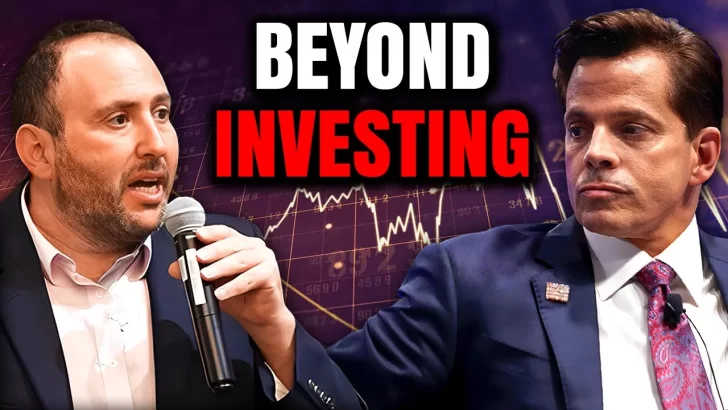
This is the conversation Anthony Scaramucci and I had on his podcast “Open Book”, which you can find here.
Anthony:
Welcome to Open Book. I am your host, Anthony Scaramucci. Joining us now is an award-winning writer and author. His name is Vitaliy Katsenelson. He’s the author of a book called Soul in the Game: The Art of a Meaningful Life, and he’s also the CEO of IMA.
First of all, Vitaliy, it’s great to have you on. Thank you so much. You’ve got such an interesting background, and I’m going to quote you and then get you to respond to it. You were born in Russia but made in America. So tell us your story and tell us what you mean by that before we get into the book.
Vitaliy:
Sure. I was born in Murmansk, Russia, in the Soviet Union. My family immigrated to the United States in 1991, so I came here when I was 18 years old. Growing up in the Soviet Union, if you stood out from everybody else, you had a miserable life because they would push you down. The system didn’t like anyone who was different.
Imagine working for a large Wall Street bank in an entry-level position, you’re told exactly what to do and nothing else. If you tried to do better, they’d send you back and say, “No, just keep doing your task.” That’s how it felt in Russia. I never got a grade higher than a C there.
But when I moved to Colorado and attended the University of Colorado Denver, everything changed. My grades skyrocketed, and I graduated cum laude. It was like going from Wells Fargo to working at a vibrant hedge fund. That’s why I say: I was born in Russia, but I was made in America. This is where I prospered as an individual.
Anthony:
So talk about Russia for a second. Americans have seen Russia as an adversary for decades, yet whenever they meet Russian people, they like them. We’re trying to figure Russia out from an American perspective. You’ve been in both worlds. Pretend I just landed from Mars, how would you describe America and Russia?
Vitaliy:
There are really different “Russias.” The Russia of a few years ago is not the Russia of today. Americans usually don’t think much about Russians; when we think negatively, it’s about the regime, not the people. But Russians believe Americans are obsessed with hating them. My Russian classmates often think our single focus in life is to hate Russia.
When I lived in the Soviet Union before 1991, we were taught to hate Americans. Propaganda films painted you as bloodsucking capitalists who lynched Black people, ate hamburgers, and cared only about money. But after the Cold War ended, we suddenly had access to American movies, and Russians fell in love with America. That love, of course, has changed over time.
Anthony:
Let’s transition to the book. It’s such a great title, Soul in the Game. When you say “soul in the game,” it implies a deep personal investment. What does this mean?
Vitaliy:
Let’s start with “skin in the game.” When you have skin in the game, you don’t just enjoy the upside; you also share the downside. If you’re a portfolio manager, you invest your own money alongside your clients’.
“Soul in the game” is skin in the game plus alignment. It means you’re fully aligned with what you’re doing, money becomes secondary. When you wake up in the morning, your “why” is clear, whether it’s hosting a podcast or writing or investing. You’re doing what you’re passionate about.
I love investing, it’s both my work and my hobby. I also love writing; I wake up around 4:30 or 5:00 a.m. and write for two hours. Because of this alignment, my decisions always flow from my principles. For example, I’d never compromise my values just to land a large client.
Anthony:
For me, my soul in the game is about human connection. I like building relationships, seeing people for who they are, and accepting their flaws. But when I read your book, I think of you as more of a philosopher. Am I wrong? Are you also a social person?
Vitaliy:
I’m a strange mix, an extroverted introvert. Meeting new people drains me, so I avoid events with lots of small talk. But I love spending time with people I know, respect, and care about. Writing also pushed me toward philosophy, two hours a day adds up to about 700 hours a year. Staring at the screen makes you reflect on life, and over time, I naturally became more philosophical.
Anthony:
Let’s talk about stoicism. What does that mean to you?
Vitaliy:
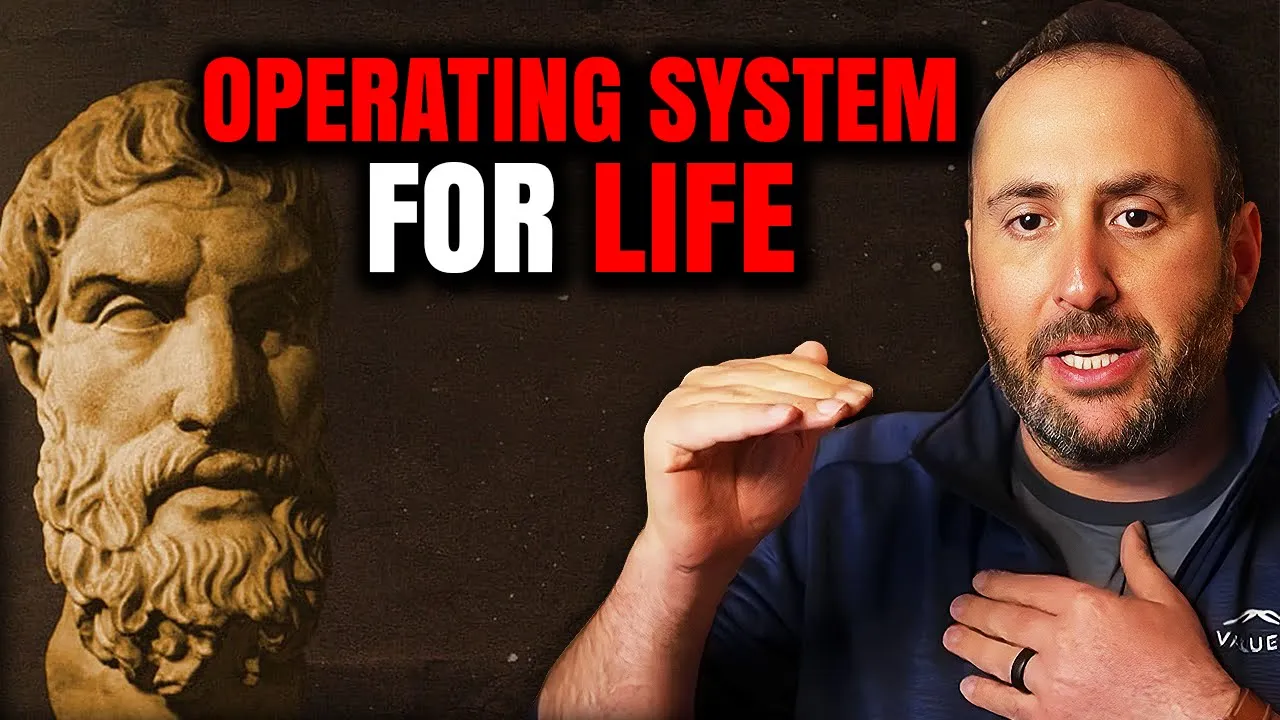
I think of stoicism as an operating system for life. It’s secular, you don’t need religion for it, and it helps minimize negative emotions. The key idea is the dichotomy of control: some things are up to us, most are not. We control our values, decisions, and reactions. Everything else is external. Once you embrace this, life becomes less stressful, richer, and more meaningful.
Anthony:
I see stoicism as embracing the temporary nature of life. Rather than being anxious, you relax into it. Do I have that right?
Vitaliy:
Yes, exactly. Carl Jung said, “Life begins at 40; the first 40 years are research.” When you’re young, life feels infinite. But at 40, you realize you’re at the midpoint if you’re lucky. Suddenly time becomes precious. Stoicism teaches you to value it.
And again, the dichotomy of control is central. Stress comes from obsessing over things outside our control. Once you focus only on what’s within your power, your character, your choices, your quality of life improves.
Anthony:
The challenge is balancing ambition with contentment, especially in a capitalist society like America. How do you balance ambition with peace and prosperity for your family?
Vitaliy:
I used to think you could have a balanced life, but really, priorities shift. In your 20s, you can pour yourself into work. Later, with kids, family matters more.
I use a regret-minimization framework: I put guardrails in place so my obsessions don’t consume me. For example, I make sure to drive my daughter to school every day, take daily walks, and keep family dinners on Fridays. These routines protect me.
I’ve also deemphasized material things. I’m not a monk, but I don’t need much. Happiness comes from wanting what you already have. Writing has helped me rewire myself, giving me introspection and clarity about what matters.
Anthony:
That makes sense. A big theme in your book is loving yourself, finding forgiveness for your mistakes and being content with who you are.
Vitaliy:
Exactly. You can control your character and your behavior, not how others see you. If you chase external validation, you risk falling into the same trap as celebrities who become addicted to drugs or alcohol because they can’t control the crowd’s approval. Focus on your character, and life quality improves.
Anthony:
Let’s pivot to investing. You write about escaping the “stock market double hell.” What do you mean by that?
Vitaliy:
As a value investor in 1999, it was heaven and hell at once. Hell because if you didn’t own tech stocks, you underperformed. Heaven because everything else was cheap.
Today in the U.S., we’re in “double hell”: everything is expensive, from the Magnificent Seven to defensive stocks like Walmart, which traded at 30x earnings in 2024. Yet, Europe offers opportunities, its problems are already priced in, making many stocks undervalued.
The stoic approach is to focus only on what’s in your control: doing the best research and buying high-quality undervalued businesses. I can’t control when the market will recognize value, but history shows it eventually does.
Anthony:
Beautifully said. Let’s finish with a word association. I’ll say a word; you respond with the first word that comes to mind. Ready?
Stoicism.
Vitaliy: Calmness.
Anthony: Investment.
Vitaliy: Value investing.
Anthony: Life.
Vitaliy: Gratitude.
Anthony: Happiness.
Vitaliy: Meaningful.
Anthony: Soul.
Vitaliy: Enlightened.
Anthony:
Brilliant. I really enjoyed speaking with you, Vitaliy Katsenelson. His book is Soul in the Game: The Art of a Meaningful Life. A beautiful book. I hope you’ll write another one and come back on.
Vitaliy:
Thank you. I really enjoyed it.









comments
0