

I sent this letter to IMA clients earlier this week. I don’t always share client letters with my readers but this one is different, and I felt compelled to share it with you now more than ever.
I did not sit down to write about the bond market, the dollar, or gold. I sat down to write about stocks. Every time I tried, the writing took me somewhere else, and after a few weeks of losing that argument with myself I gave in. What came out is less a portfolio update and more an attempt to describe a change in the weather that I do not think most people are looking at yet.
It is long, so I am sending it to you in two parts. This is the first. The second half, on why I have reluctantly turned bullish on gold, arrives next Thursday.
Narrative Change
I’ve been working on writing you a letter for a few weeks now. Every time, my writing would take me on an unexpected journey that pushed the letter further from completion. I really wanted this letter to focus on individual stocks. But they are not what is on my mind right now (this is both Vitaliy the writer and the investor speaking). I get a feeling we are having a Caliber 89 moment. Let me explain.
The mechanical watch world changed forever when the Japanese came out with the quartz watch in 1969: basically a battery-operated watch. It went down in watch history books as the “Quartz Crisis,” the mechanical watch version of the Great Depression. At the time, watches were mainly used to tell time. I know, it sounds banal, but this is not the main reason premium luxury watches are bought today. But anyway, consumption of mechanical watches collapsed.
Quartz watches were cheaper, more accurate, could tell time and date, and even came with a calculator. The calculator watch was my dream watch in the early 80s. Many watch companies went bankrupt, not just in Switzerland but in the US as well. This great watch depression lasted for more than a decade.
Until..
This brings us to Patek Philippe. In 1979, this ultra-luxury, then 140-year-old company, which made around 10,000 watches a year, decided to make a wow pocket watch for its 150th anniversary in 1989. I love how the Swiss think not just a quarter out, but a decade out. At the time it probably felt like building the most beautiful deck furniture on the Titanic, but nevertheless they did it.
Fast-forward ten years, and Patek made a pocket watch and called it Caliber 89. They made four of them. This watch weighed over two pounds (nobody was going to put this brick in their pocket) and had 33 complications.
Alright, for the civilians (normal folks) I need to explain what complications are. If we are honest, they are basically unnecessary nonsense: things that watches do aside from telling you the time (hour and minute hands). Caliber 89 showed moon phases, a chronograph, an alarm, a calendar, the location of the sun, and so on. The goal was for this watch to surpass the previous record of 24 complications. It was art and a marvel of computer-aided design, and it started to pique people’s interest in mechanical watches and complications.
One of these watches was sold at auction in 1989 for about $3 million. This was almost four decades ago, when that was real money. It made a huge news splash, probably because a $30 Seiko could do all of these complications with more precision, and a lot more. Even Saturday Night Live made skits about it.
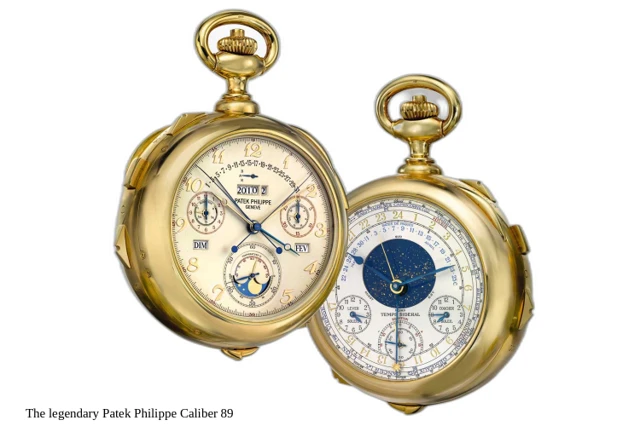
And something unexpected happened: the Caliber 89 watch marked the bottom of the Quartz Crisis. Interest in mechanical watches increased, and the industry never looked back. What everyone thought was the Titanic ended up being another cruise ship stuffed with oversized shrimp going to the Bahamas. Caliber 89 changed, or at least marked the change of, the narrative.
Narrative change is a reversal of mass behavior. I have a mental model for life which is based on your typical university campus: you have exact science and social science departments. The exact science department is governed by immutable laws of physics, the ones that can be defined by precise formulas, the E=mc² type. You can go to the top of a skyscraper, step off the ledge, and argue with gravity for about 20 seconds. And then there is the social science department, which is governed by complex models that lack precision and require a lot of humility.
If you come into this domain armed with only the exact science toolset, you’ll be frustrated and disappointed. The main difference between the two is human behavior: social science is driven by logical and psychological factors and impacted by random factors that we can rationalize in hindsight, like I just did with Caliber 89.
Economics and stock market valuation are governed by soft laws, but the reality bent by human behavior can disagree with these soft laws for much longer than rational actors would expect, or stay solvent. The stock market bubble that popped in March of 2000 looked like a bubble in the Marches of 97, 98, and 99. The housing bubble of 2008 looked like one years earlier. The change, going from euphoria to despair, is a change in narrative.
Alright, this is a long story, but the writer in me wanted to tell it to you and to bring us to something that happened in mid-August 2026. The 30-year Treasury yield went to its highest level in 19 years, above 5.3%, a level last seen in 2007, and the 10-year hit 4.75%. These yields are very important for the economy because 30-year mortgages are set based on them, and housing is one of the largest asset classes in the US: about two-thirds of American households own their homes.
But what happened next did not shock me, but it worries me: the US Treasury, to lower yields, bought back bonds it had issued, at least doubling its buyback operations for 10- to 30-year maturities. The yields declined for a day and then went higher. The US Treasury financed this purchase by issuing short-term Treasuries.
We, the free market capitalists, are basically saying: the market price that is set by free markets (bond investors) for our Treasuries, well, we don’t like it and we’ll change it. The market said: not so fast. Bond investors decided they don’t want to be paid 4.7% to own 10-year Treasuries because we run large budget deficits, we are not doing anything about them, and they may actually go up, not decline, over the next 10 years. Budget deficits mean inflation. I personally would not buy a 10-year Treasury even at 6%.
Today we are spending more on interest payments than on defense, and the defense budget (after our inept performance in Iran) is going up, not down. Budget deficit is a fancy phrase for living beyond our means. We pay for the lifestyle with borrowed money. We’ll pay back the debt with cheaper dollars: that is what inflation is.
We are going to discuss the US dollar as the world reserve currency next (something I wrote a few weeks ago as part of the letter that has been delayed), but let’s make it clear: this doesn’t bode well for confidence in the US dollar. Predictably, gold and other hard assets went up and the dollar declined on the news. These market interventions will not stop and likely mark just the beginning.
This is not the first time the US Treasury Department has bought its own Treasuries, but this type of action was usually reserved for times of market dislocation during a crisis. Our economy is supposedly booming and doing great. In addition, the US Treasury tried to prop up the Japanese yen, which was declining, through complex market operations.
Maybe paranoia is getting the best of this paranoid Russian Jew, but our meddling in exchange and interest rates is a sign that things that cannot go on forever eventually don’t, and maybe we are approaching the “don’t” moment. This may be the Caliber 89 moment for the US dollar and inflation. This is when the markets wake up to the fact that what is going on in the US economy is unsustainable.
Caliber 89 marked the end of a decade-long perception that the mechanical watch industry was dead. It was a change-in-narrative moment. August 2026 may end up being the beginning of the markets waking up to the reality that what the US is doing is unsustainable: a change in narrative and a redirection of focus to the fact that the largest economy in the world has been living beyond its means, its lavish lifestyle financed by the rest of the world, and the world doesn’t want to finance it anymore, at least not at interest rates that don’t destroy our budget.
I am not an economist but an investor. The difference between me and an economist is that my pontification doesn’t end on a blackboard but rests in real-life decisions. Neither one of us knows what the future will look like. But the probability that we will look back at today’s interest rates a few years from now as the good old days has increased. Bond investors are not dumb, and they’ll start demanding higher interest payments; they already do. The more the US Treasury tries to fight it, the weaker the dollar will become and the more things are going to cost. A weak dollar means higher inflation and thus higher interest rates.
You’d think this would be the time to run for the stock market exits? This is where things get even trickier.
Stocks are probably the best asset class for inflationary times. Though not all stocks: expensive stocks are likely to be the casualties of higher interest rates. Their cash flows lie far in the future, and these cash flows are now discounted at much higher rates and thus are worth less in today’s dollars.
There are so many other currents going on in the economy and the stock market. Our portfolio has achieved something I have never seen before: we have negative correlation to the market while it is still doing well. We have experienced negative correlation to the market in the past: market went up, we went down, and vice versa. But over the last few months, on an up day we are down, and on a down day in the market we are up, and the majority of our stocks are going up.
I was puzzled about that until I saw a chart showing this is not an IMA-specific phenomenon but a broader market one: 120 out of 500 stocks in the S&P 500 have negative correlation to the market. The last time this was observed was 1999. This makes sense. The top ten stocks, which are mostly related to AI, are roughly 37% of the market and responsible for a good chunk of daily movements. We don’t own them.
The AI obsession is not just impacting the market. We have two economies: the AI economy and everything else. The AI economy is doing great. It is fueled by a lot of optimism and a growing pile of debt. I’ve written about this recently. The problem is that the rest of the economy is doing poorly and is maybe in a recession. Remove the AI boom and we are either barely growing or maybe even shrinking. It is hard to tell. So this is what has been racking my brain as I position the portfolio for what may prove to be turbulent times ahead. So here is the good news: my identity as an investor and my wealth are in the same boat with you, so let me worry for both of us.
To be continued next Thursday.
Key takeaways
- Patek Philippe’s Caliber 89 was, if we are honest, unnecessary nonsense — two pounds of complications no one would put in a pocket. And yet it marked the bottom of the Quartz Crisis. Narratives don’t turn on logic; they turn, and we rationalize them afterward.
- I have a mental model based on a university campus. Step off a skyscraper and you can argue with gravity for about 20 seconds. Markets are not that department. Bring only the exact-science toolset to economics and you’ll be frustrated and disappointed.
- In mid-August 2026, the 30-year Treasury yield hit its highest level in 19 years, and the US Treasury responded by buying back its own bonds — financed by issuing short-term debt. Yields fell for a day, then went higher. The market said: not so fast.
- Budget deficit is a fancy phrase for living beyond our means. We pay for the lifestyle with borrowed money and repay it with cheaper dollars — that is what inflation is. I personally would not buy a 10-year Treasury even at 6%.
- Stocks are probably the best asset class for inflationary times, though not all stocks. Expensive ones, whose cash flows lie far in the future, are the likely casualties of higher rates. Meanwhile 120 of the S&P 500 now have negative correlation to the market — last seen in 1999.













Thank you for sharing with your readers Vitaliy. Can’t wait for part II as I think a lot of investors are having the same thoughts.