

My biggest problem was that my family, including yours truly, was not good at lying. Okay, I am getting ahead of myself.
Let me rewind the clock seven years.
My son Jonah was not a good student in high school. His eleventh-grade GPA was 1.3. He was gentle, considerate, loved making others laugh—the life of the party. People adored him. But despite his rich social life, his academic achievements were lacking. To make things worse, every D or F he received was his teachers’ fault, a classic victim mentality. Looking back, my wife and I were extremely under-reactive. Maybe because I saw myself in Jonah—I was a very late bloomer, and that apple did not fall far from the (father) tree.
I don’t think I took school seriously until my early twenties. Teachers in Russia did not want to deal with failing me, so they just gave me passing grades. Come to think of it, we had a good unspoken arrangement: They did not grade my classwork or homework, and I did not complain if I got a C for my work. Other than the little fact that I did not learn much in school, I was on the winning side of this arrangement—a solid F student with Cs on my diploma. My attention was somewhere else. Girls.
Then in my junior year at the University of Colorado, something inside me snapped. I was dating this wonderful girl who was an A student from birth—everything she touched came with an A attached. We never had a conversation about my lack of direction or my mediocre grades. But one day, something shifted.
I vividly remember creating a spreadsheet laying out all the classes I needed to graduate and the timeline for taking them. Almost overnight I became a good student. I realized that for me to get good grades, I actually needed to show up to class. I am wired with a very binary operating system—I cannot do things a little bit. I couldn’t go to some classes but not others. If I skipped one class, I’d skip the rest of the semester. Barring lying in bed with a fever one time, I don’t think I missed a single class in my last three years of university. I graduated from CU Denver with honors.
Back to Jonah.
Senior year. It was a girl—he is my son, after all. The summer before, Jonah had gone to Israel with a group of Jewish kids from Colorado. This is where he met Molly Widoff. When we picked him up from the airport, he could not stop talking about her.
Molly was beautiful, kind, thoughtful, and sharp. She was a student senator in a large school. As they started dating, we started seeing Jonah a lot less. When he stopped coming home after school, my wife and I were concerned. Jonah told us he was studying in the library. At first, we had our doubts, but then we checked his location—it was an unmoving dot in the library. He could not concentrate at home; he needed a change of scenery and the inability to talk on his phone. The local library was perfect. His senior year GPA was 3.9. It was all Molly. She never said a word about his grades, but he wanted to be worthy of her.
Every class Jonah has taken since then, he has aced. In college, he tutored dozens of students, helping them while deepening his own understanding. He graduated with distinction from the University of Colorado Boulder. Like me, he studied finance, and like me, he wasn’t handed brilliance. He simply outworked everyone around him.
Molly and Jonah dated through their senior year of high school. After graduation, Jonah was rejected by every university except the local community college, so he chose to take a gap year in Israel instead. He enrolled in university-level courses there and completed two internships, one at a marketing firm and another at OurCrowd.
Molly went to Tulane.
Statistically, the odds were stacked against this relationship. Then came Covid, interrupting Jonah’s second semester in Israel, and both Molly and Jonah moved back home to Denver. As the pandemic wound down, Jonah went to CU Boulder and Molly returned to Tulane. Their relationship continued. It lacked drama; it was boringly good. They became best friends.
After graduating, Jonah joined a fintech startup that failed to take off. Then he got a finance job with large corporate America. A few months into his job, he was asked to do unethical stuff. He confronted the management, but they gaslit him. He resigned immediately. I was very proud of him.
And then the improbable happened – Jonah joined IMA.
I was never shy about wanting my kids to join me. I love them, and of course I’d love to see them daily and work with them. But—and this is important—I want them to have happy and meaningful lives more than I want them near me. I’ve seen kids go into family businesses because it’s easy and to please their parents, then become miserable. I don’t want that. This is why I never pushed Jonah to work for me, even when he chose a finance degree at CU Boulder after exhausting every other option because he “kind of liked finance.”
Besides, Jonah is creative and curious but not interested in investing research—what would he do at IMA?
Meanwhile at IMA, I had a puzzle I couldn’t solve. Every company needs to grow—otherwise entropy kicks in. But once we got to a good size, I became more concerned with the quality of growth than the rate of it. We want the right clients and turn away prospective clients who are not a good fit. IMA is not a traditional asset manager. We don’t do traditional selling—no steak dinners for strangers, no socializing in country clubs. I spend most of my energy on research, my team on servicing clients. Clients tell their friends; people read my articles and books and reach out to us.
The role of a marketing director would be to increase the reach of my writing. We had been passively looking for the right person for a long time, but it was always a low priority. What we do is so different that traditional marketing knowledge was more of a liability than an asset. Just a few months earlier, I’d floated the idea of hiring a recent university graduate who could learn marketing on the job. Then we got busy with other things, and the idea slipped onto the back burner.
After Jonah quit his last job, a mutual friend told him, “You should work for your father.” Jonah said he’d promised himself to forge his own path. The friend replied, “People are dying to work for your father and learn from him, and you want to throw that away?”
Jonah told me about this conversation, and the light went on. Jonah was the person I’d been looking for. He was always the entrepreneurial kind. In his senior year of high school, he found a Nike outlet store closing, bought hundreds of pairs of shoes, and simultaneously (before leaving the store) sold them on StockX—true riskless arbitrage, making a few thousand dollars. Molly and his sisters spent a weekend helping him pack and ship. Jonah bought them ice cream for their help.
I told him that as much as I’d love for him to work for IMA, my number one priority was his long-term happiness. He said he knew I believed in meritocracy and wanted me to treat him like everyone else. He also asked for a very low base salary, with his total pay linked to the success of his marketing efforts. If he didn’t succeed, he’d be the lowest-paid employee at IMA. From personal experience, I know that meaning comes from tension, from climbing personal mountains, not from being helicoptered onto the summit by your parents. I liked this arrangement.
Also, as Jonah explains, he’s been interning at IMA for 24 years. Which is true. He’s the person I call when I have creative ideas or stumble on an interesting stock. I take him with me everywhere. He’s one of the first people I share my articles with, always receiving honest (often brutal) feedback. He also has two skills I rarely see together, which are paramount for this role—extreme organization and unconventional, creative thinking. Before Jonah started with IMA, I wrote him a three-page letter setting clear expectations for him. It has been four months. At times we have to redraw the lines between the father and the boss, but overall it couldn’t have gone better.
Most importantly, he loves what he is doing. And with his professional life finally settled, Jonah was ready to take the step he’d been planning for years: proposing to Molly.
After she graduated from Tulane, Molly moved back to Denver. She got a job with an organization that does policy research for state legislators. Next year, she is going to Northwestern to get a master’s degree in counseling through their online program.
Jonah and Molly had been living together for a few years. They are a terrific couple. Over the years, we started to take Molly on family trips. You learn a lot about a person when you travel with them. The more time we spent with Molly, the more our family fell in love with her.
Jonah and Molly had been talking about getting married, but Jonah was waiting for his career to take shape before he popped the question.
A few months ago, Jonah wrote a letter to Molly’s parents asking for her hand. Hand-delivered it. I am a writer: This letter was one of the best pieces of writing I’ve ever read. Molly’s parents did not have a dry eye after they finished reading it. Jonah shared it with me, and moisture paid a visit to my eyes, too. Molly’s parents gave Jonah their blessing.
He bought Molly a ring but was waiting for the right occasion to propose.
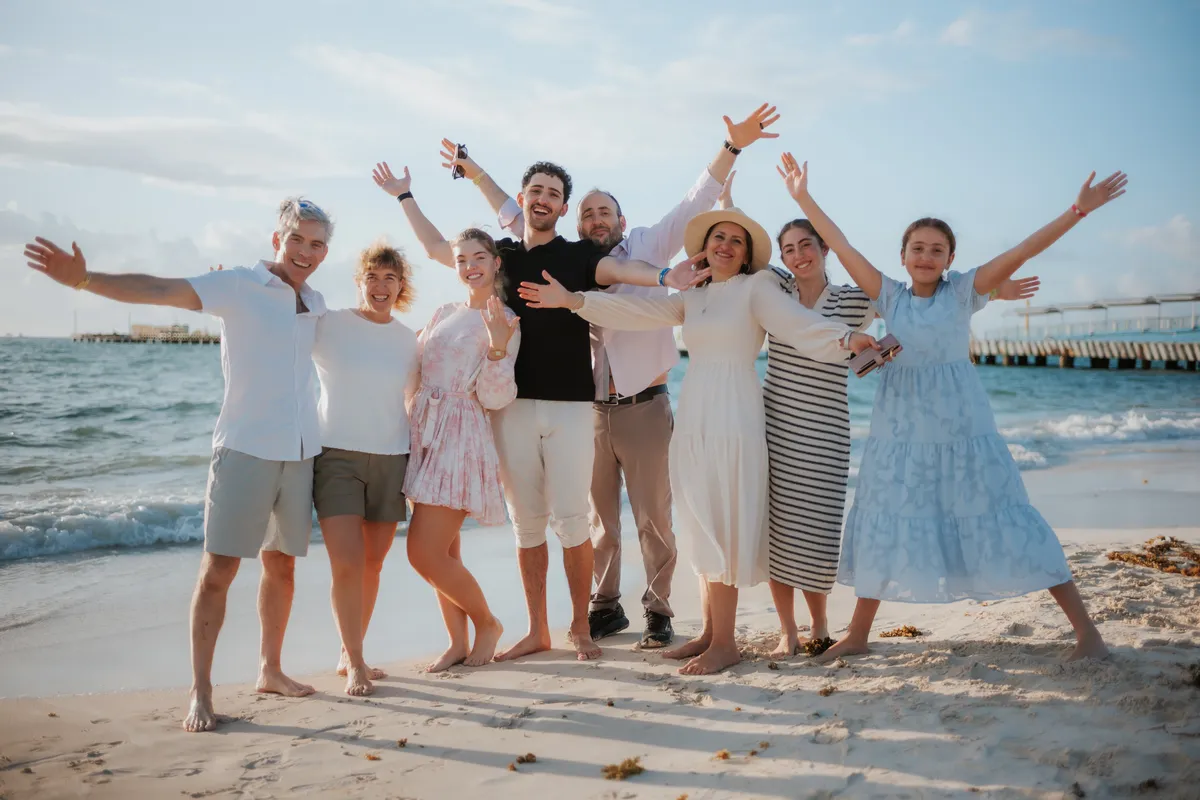
Then I had an idea. We were planning to go to Playa del Carmen—a little resort town in Riviera Maya, near Cancun. We bought tickets in August. It was going to be six of us: my wife, daughters (Hannah and Mia Sarah), Jonah, Molly, and I. We’ve been to Playa del Carmen half a dozen times, and there is a beautiful statue of two mermaids overlooking the water. He should propose to her there. He loved the idea.
And this is when “Operation Molly” started to take shape. Jonah was going to propose on Tuesday, November 25th at 7am—right at sunrise. Our flight was on Monday at 11am. Molly’s parents were to board a 9am flight and hide out in a hotel until 6:30 the next morning. Google Docs were created and shared with instructions and a tight timeline for both families. Molly’s parents were to turn off location tracking on their phones.
We had to do a lot of lying. And as I already mentioned, we—especially yours truly—are horrible at lying.
Jonah hired a photographer to document the proposal. He wanted to make sure Molly was not dressed in a bathing suit.
But how do you get Molly to a square with a statue in Playa del Carmen at 7am? How do you make sure she’s dressed for the occasion?
Jonah came up with a plan where I had to lie. I have a friend named Luca who lives in Cancun. A few years ago, Luca took me and Hannah on his boat around Cancun. Jonah’s idea: “The night before, at dinner, you tell everyone, including Molly, that Luca just called and invited us to join him on his boat. We’re going to a yacht club for breakfast, and that’s why everyone has to dress conservatively.”
During dinner on Monday night, I announced that I needed to make a phone call. I called my brother Alex, pretended I was talking to Luca, and repeated verbatim what Jonah told me to say. I thought my smile and lack of objections from my wife gave it away. My daughters, who are just as bad at lying, tried to help. We thought Molly saw through it but played along.
The next morning, still in the complete darkness, my wife and daughters met Josh and Edie, Molly’s parents, outside the hotel lobby. We were the only people up in sleepy Playa del Carmen. We walked to the square where Jonah was going to propose and met the photographer, who was a pro at this. He gave us instructions. We were to hide behind the trees.
At 6:50 on the dot, I called Jonah, following his previous instructions, and told him we were running late, meet us by the square. As the sun came up, Jonah and Molly walked into the square. As they reached the mermaid statue, Jonah got on one knee and proposed. Molly was in true shock—her face was full of joy, panic (the good kind), and complete surprise. She was even more stunned to see her parents show up out of nowhere. She had not seen through our terrible attempts at lying.
The next hour was like a dream. This is what we live for – these special moments. It was magical.

The evening before, after I had finished lying to Molly and the couple left for their room, my 11-year-old daughter, Mia Sarah, turned to my wife and me and said, “I am going to have another sister—Molly!”
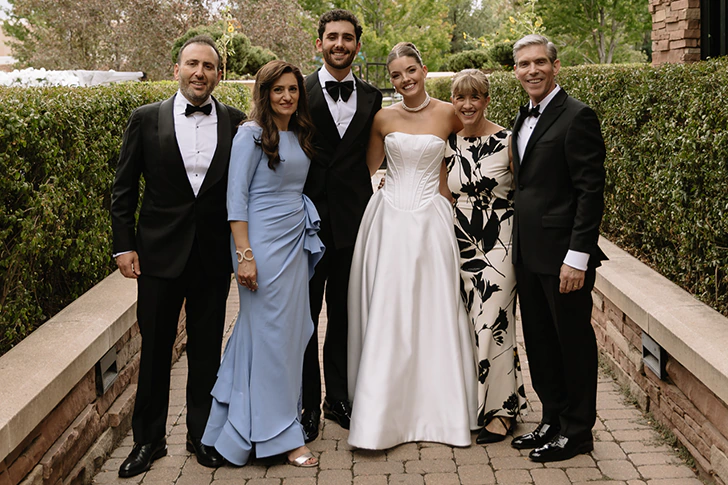
She was right, and my wife and I are getting a new daughter and could not be happier.












Congratulation on your family very special moment. By reading this article I can feel your love to your family and also your work!
God bless you and your family!
Good story. Wonderful family. Thanks for sharing.