
This article is an excerpt from the winter letter I wrote to IMA clients.
Uber Update
Fundamentally, Uber (UBER) is performing exceptionally well. Its bookings and revenues are growing around 20% a year. Its costs are growing at a much slower pace than revenues, and profits continue to grow at a much faster pace than revenues. Its service has become a utility in the digital economy.
The stock, however, does not trade on its fundamental performance today; it is trading on the news flow about autonomous vehicles (AV).
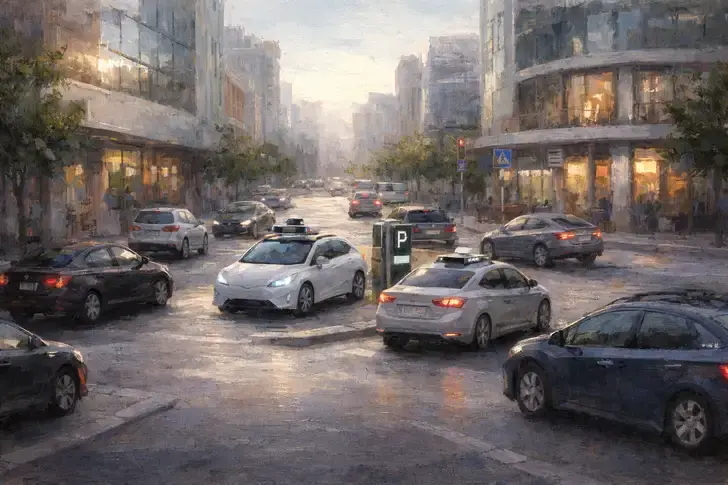
I visited San Francisco in the summer of 2025, and Waymos were crawling the streets like cockroaches. At some point it felt like there were more Waymos on the road than other cars. I took a Waymo with my colleague Cyrus. We were genuinely impressed. It was a seamless experience.
Uber is dead, long live Waymo?
Not So Fast
Waymo today is either losing money or barely breaking even for Alphabet, its owner. It is a super-secure car, not just because of software but also because of hardware. Waymo does not just operate on cameras like Tesla; it is packed with lidar and radar. I have read that a fully equipped Waymo car costs $150,000–$180,000. Knowing what we know about technology, it is fair to assume that in the future the extra hardware costs will collapse to nothing.
Tesla has taken a different approach. It has taken out lidar and radar and gone camera-only. Who am I to disagree with Elon? But in my experience (my family has three Teslas) full self-driving works fine almost all the time.
But I struggle with the “almost” part. It does not work in bad weather, when it rains or snows. The issue is sensors: cameras get clogged up. Also, lidar and radar can see far away; at a quarter of a mile, going at 60 miles an hour, that is 15 seconds away. Cameras lack that range.
But let’s assume Elon will figure this out.
Uber is dead? Long live Waymo and Tesla?
The Utilization Problem
To be successful at the rideshare self-driving thing, one figure becomes crucial: utilization. A car that spends two hours giving rides costs almost as much (less fuel and wear and tear) as one that is on the road ten hours a day.
People tend to do things in unison. We get up, drive kids to school, go to work, go to lunch, go back home. All of these activities happen for the most part at the same time of day.
Let’s say you are Waymo and you need to figure out how many cars to put on the road. Peak-time demand is 100 cars and off-peak demand is 20.
If you buy 100 cars, you are buying infinite love from riders; you will be able to fetch them a car during peak and off-peak times. This love will be expensive, and during off-peak times eighty cars will be collecting expensive dust and earning no money. This scenario brings a lot of love, poor financial performance, and eventual extinction.
Now, you can take the polar opposite approach. Buy only 20 cars. They will be busy during peak and off-peak times. During off-peak times consumers will love you. But during peak times the demand is for 100 cars and you only have 20 – the wait times (the ridesharing hell) will bring a lot of hate. Your utilization will be high at first, but then riders frustrated with long wait times during peak hours will move to someone else, and extinction awaits you.
Where Uber Fits In
This is where Uber comes in. If Waymo puts its cars on the Uber app, during peak times consumers can choose between Waymo or HVs (human vehicles; I figure it is only fair we have a name for human-operated vehicles). During off-peak times they will be choosing from a menu of HVs and AVs.
For this privilege of unlimited consumer love and much higher utilization, Waymo will pay Uber about 20%. (Uber’s usual take rate for HVs is 28%, but that also covers insurance. AVs are insured by their owners.) Uber has shown that when Waymo put its cars on the app, the increased utilization more than offset the cost of the platform.
One thing I learned from our painful experience investing in Intermex: If you own a company in an industry experiencing a transition, you want management that is not dismissing the transition but fully embracing it. As a small sidebar: We are entering a period where, with the help of AI, change will crawl into unexpected places; and so the ability to adapt and embrace change is something we look for in all management teams.
This is what we really like about Uber’s management; they are not dismissing AVs, they are embracing them. They are signing partnerships with Waymo but also bringing a dozen AV technologies and partners to their markets. It is unlikely that Tesla and Waymo are going to be the only AV providers. There are literally dozens of companies working on self-driving globally.
Uber announced that they will have self-driving in 15 markets by the end of the year. As a consumer, I care about four things in rideshare: safety, wait time, price, and ease of the experience. Uber can deliver all four with its hybrid network.
The Bigger Picture
But we may be looking at this thing completely wrong. AVs will likely bring lower prices and thus grow the rideshare market. Here is what I wrote from my most recent visit to London:
“The number of black cabs has declined from over 22,000 a decade ago to around 15,000 today. ‘The Knowledge’ academy only produced two graduates last month. What really shocked me is that there are now over 110,000 Ubers roaming the streets of London. Uber is, in my experience, 40% cheaper, and you can call one from the app. Yes, cab drivers lost thousands of cabs to Uber, but the market for hailed cars expanded by 100,000 thanks to added convenience and lower prices.”
What lower rideshare prices did to London’s black cab market will likely happen to the rideshare market as a whole: it will grow, and Uber will likely be right in the middle of it.
Key takeaways
- Fixed vs. Variable Costs: I break down how shifting from human drivers to a robotaxi fleet moves Uber from a low-risk platform to a high-risk asset owner.
- The Off-Peak Slump: I argue that maintaining high autonomous vehicle utilization is virtually impossible during the inevitable mid-day and late-night demand lulls.
- Maintenance Overhead: I highlight the “invisible” costs of cleaning, charging, and sensor calibration that serve as the secret margin killers for driverless fleets.
- The Scale Paradox: I explain why, without solving the utilization gap, simply adding more cars to the network only accelerates the burn rate of capital.
- Strategic Pivot: I explore why Uber is now aggressively seeking hardware partners to offload the massive financial liability of idle autonomous assets.












0 comments
0