
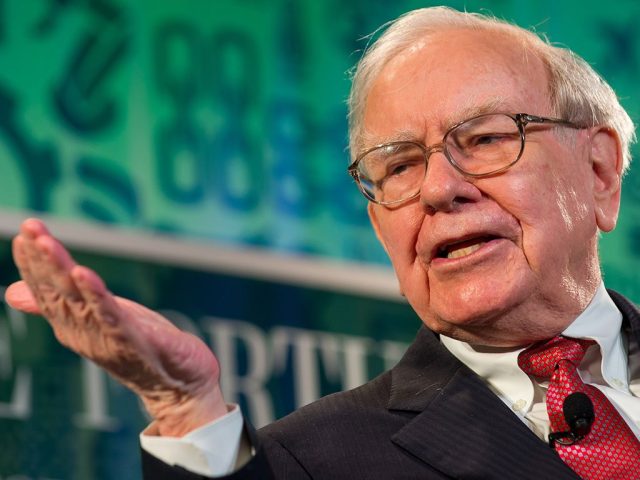
Next Thursday, for the seventh time, I am going to Omaha, Nebraska, for the Berkshire Hathaway annual meeting. But this is the first time that I find myself respecting Mr. Buffett a little bit less than the year before.
One of Berkshire Hathaway’s largest and oldest stock holdings, Coca-Cola Co., held a proxy vote yesterday, and its management clearly decided to award itself too much stock. Warren Buffett acknowledged in an interview that he is against the plan: “We do not believe it would be consistent with Berkshire’s long-ingrained culture to support such a plan at any of your equity holdings.”
However, instead of expressing with his proxy ballot what he really feels, he abstained from voting against the plan, and explained: “I could never vote against Coca-Cola.”
By failing to vote against something that was clearly wrong, Buffett, who in my mind (until yesterday) used to be a moral compass for corporate America, became another middling American politician — the common type that all of us respect so little, the one that votes not for what he believes in but for what is going to keep him in the good graces of his party or get him reelected.
When your company owns 10 percent of another company (even if it is Coke), there is a responsibility that comes with the investment. But when you are Warren Buffett, who constantly speaks out against excessive compensation, that responsibility is even greater.
There should be no double standard for Coca-Cola or for Buffett. After paying its management millions of dollars to run a company “a monkey could run” (Buffett’s words, not mine), shareholders shouldn’t have to fork over an additional 14 to 16 percent over four years to management to incent them to do their jobs — running a company with such a significant competitive advantage (which was there long before these executives arrived) that any MBA student with a C- average could operate.
We don’t own Coke and probably won’t own it unless the price gets cut by half, so my tirade here is not as a wounded shareholder but as an American. It’s what Buffett said in a CNBC interview that bothered me the most: “It’s kind of un-American to vote no at a Coke meeting.” I would not want to live in a country where everyone always agrees with the powers that be, where people are afraid to speak up. I lived there once — in the Soviet Union.
I could not disagree more with Buffett. Coke’s compensation plan is unjust for the shareholders. It is American to speak up against injustice — yes, even if it is perpetrated by an American icon such as Coke. Let me correct that: especially if it is an American icon such as Coke. And let’s be honest: The shareholders, not the management, own Coke. An injustice is what transpired at the company, even if 83 percent of shareholders who voted were too indifferent to read the proxy.
It is unpleasant to write something negative about a person you respect and owe so much in your development as an investor and as individual. But I am sure the pre-Coke-vote Warren Buffett, the one who had such a tremendous impact on me, would want people to disagree with him if he were wrong.
That said, I am still making my annual pilgrimmage to Omaha. But as I’ve written in the past, going to the Berkshire Hathaway meeting is not really about Berkshire Hathaway and not even about Buffett or his right-hand man Charlie Munger. Omaha, for these few days in spring, becomes value investor central, giving me the opportunity to see my value investment friends from all over the world. [/signinlocker]













comments
0