
The Intellectual
Investor’s
Lexicon
By Vitaliy Katsenelson
Bull Market (psychological effect)
A bull market makes you feel smarter than you are, the same way a bear market makes you feel dumber than you are.
Daily Liquidity (feature and bug)
The stock market’s daily liquidity — stocks being priced continuously throughout the day — is both a feature and a bug. If you unintentionally let the market into your life, it will ruin you. The human mind is not built for it; it interprets frequency and loudness as authority.
Dichotomy of Control
Some things are within our power — our values, our character, our decisions — and some aren’t. We can control what we do. We cannot control when the stock market will stop pricing fast-growing companies as priceless and slower-growing companies as worthless.
Discomfort of Right Decisions
The right decisions usually come with a certain amount of discomfort, and for good reason: you are making them against the grain of the market. Selling when everyone else is excited and enthusiastic is incredibly difficult.
EQ Volatility
One of the most difficult parts of being an investor is not the fluctuation of IQ but the volatility of your own EQ.
Humility (in investing)
Humility means you don’t have all the answers, you keep an open mind, and you realize that the range of outcomes is wider than in the past.
Long-Term Time Horizon
Having a long-term time horizon is a valuable asset that has to be guarded like a treasure. Having a longer time horizon than the rest of the market is a significant competitive advantage.
Market Timing vs. Rationality
I am not advocating for timing the market, but I am arguing for being rational, not letting the market make decisions for you. Don’t get intoxicated on the market’s euphoria.
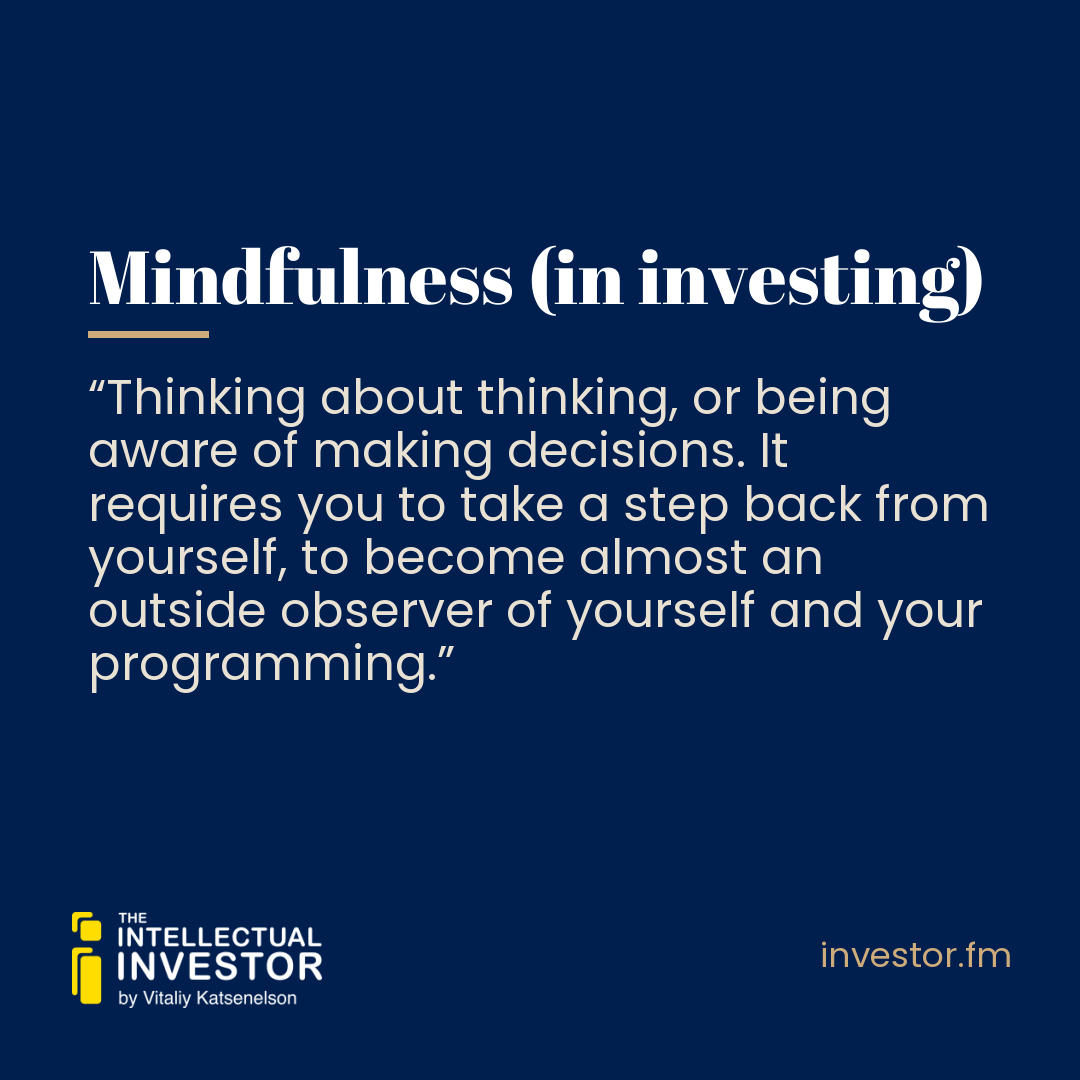
Mindfulness (in investing)
Thinking about thinking, or being aware of making decisions. It requires you to take a step back from yourself, to become almost an outside observer of yourself and your programming.
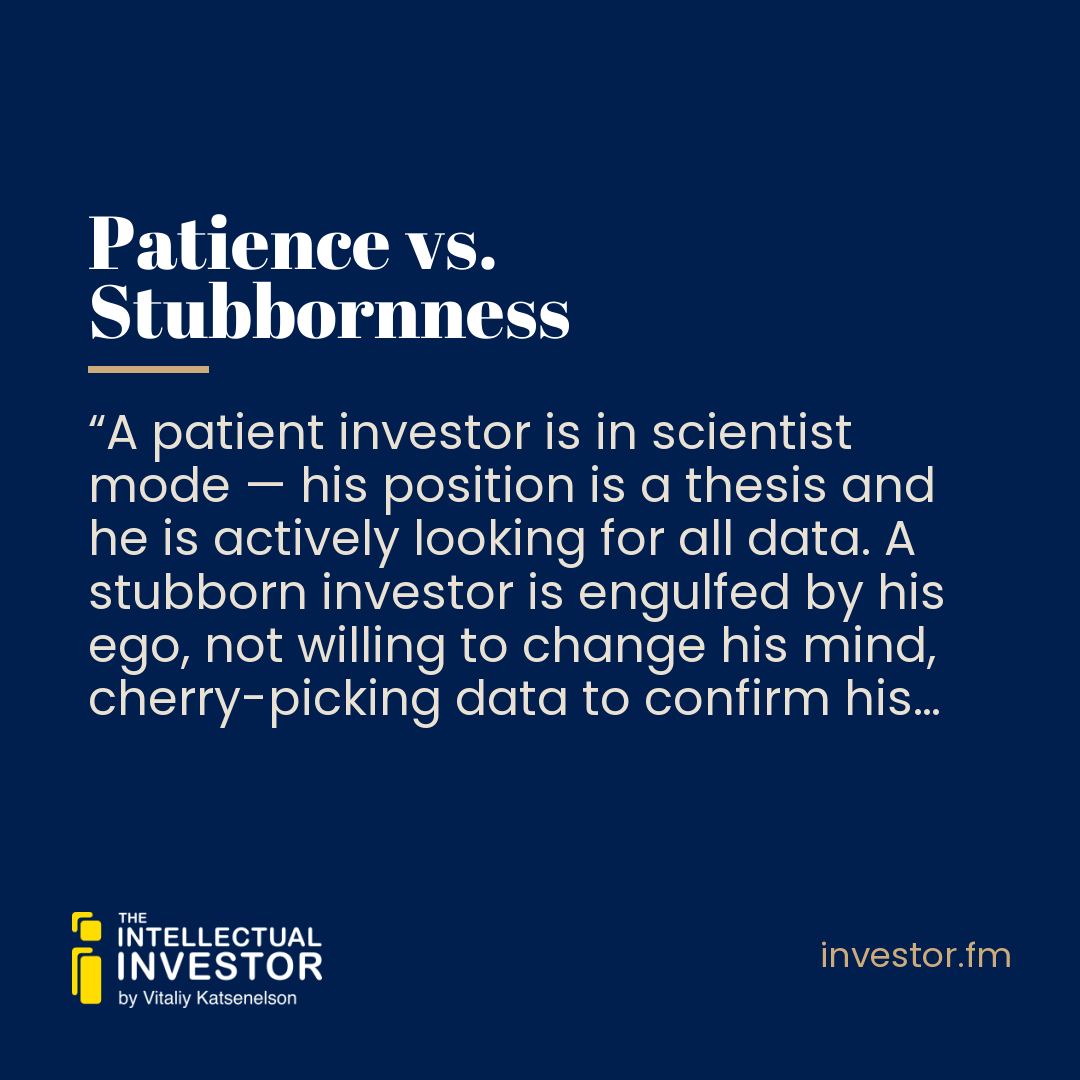
Patience vs. Stubbornness
A patient investor is in scientist mode — his position is a thesis and he is actively looking for all data. A stubborn investor is engulfed by his ego, not willing to change his mind, cherry-picking data to confirm his unshakable belief.
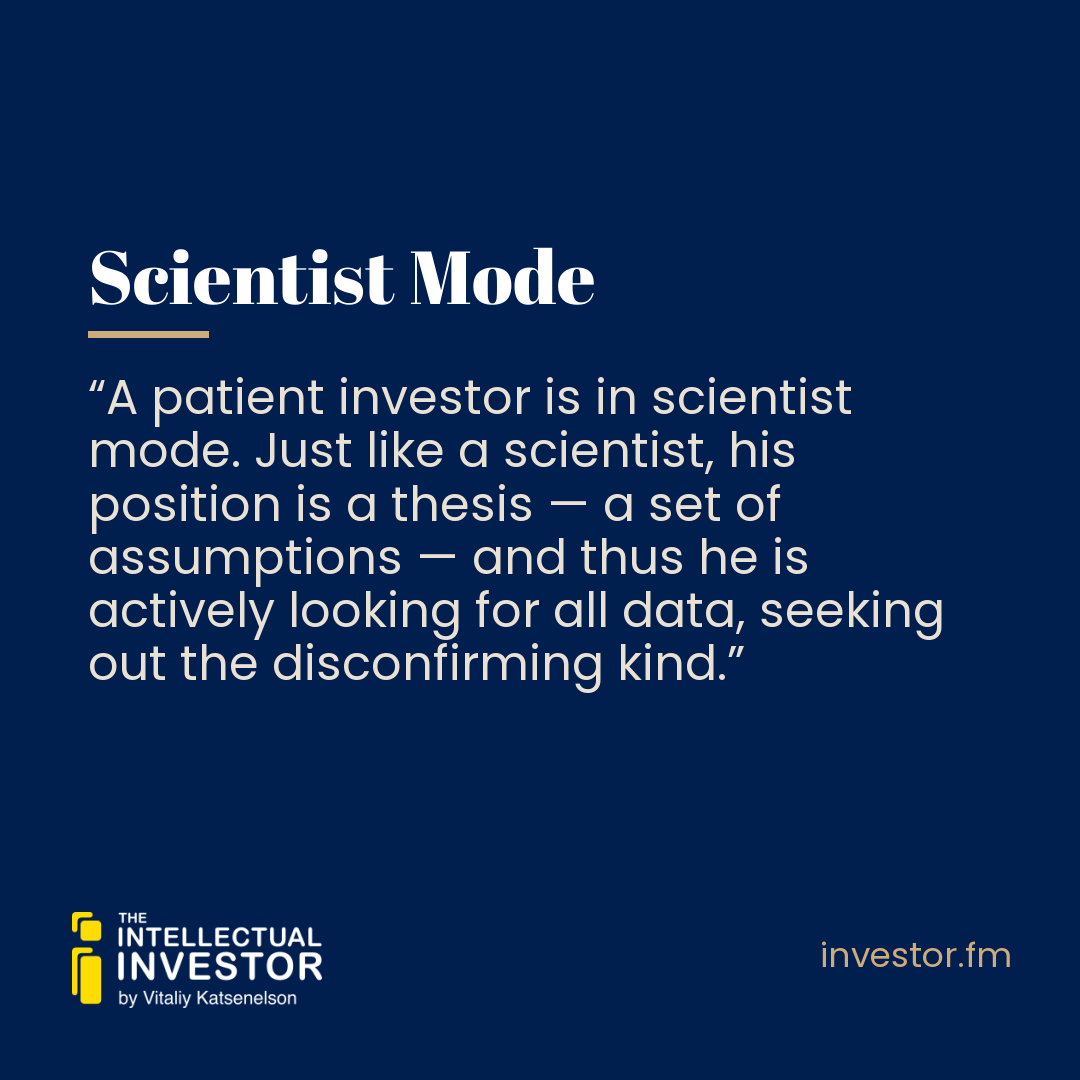
Scientist Mode
A patient investor is in scientist mode. Just like a scientist, his position is a thesis — a set of assumptions — and thus he is actively looking for all data, seeking out the disconfirming kind.
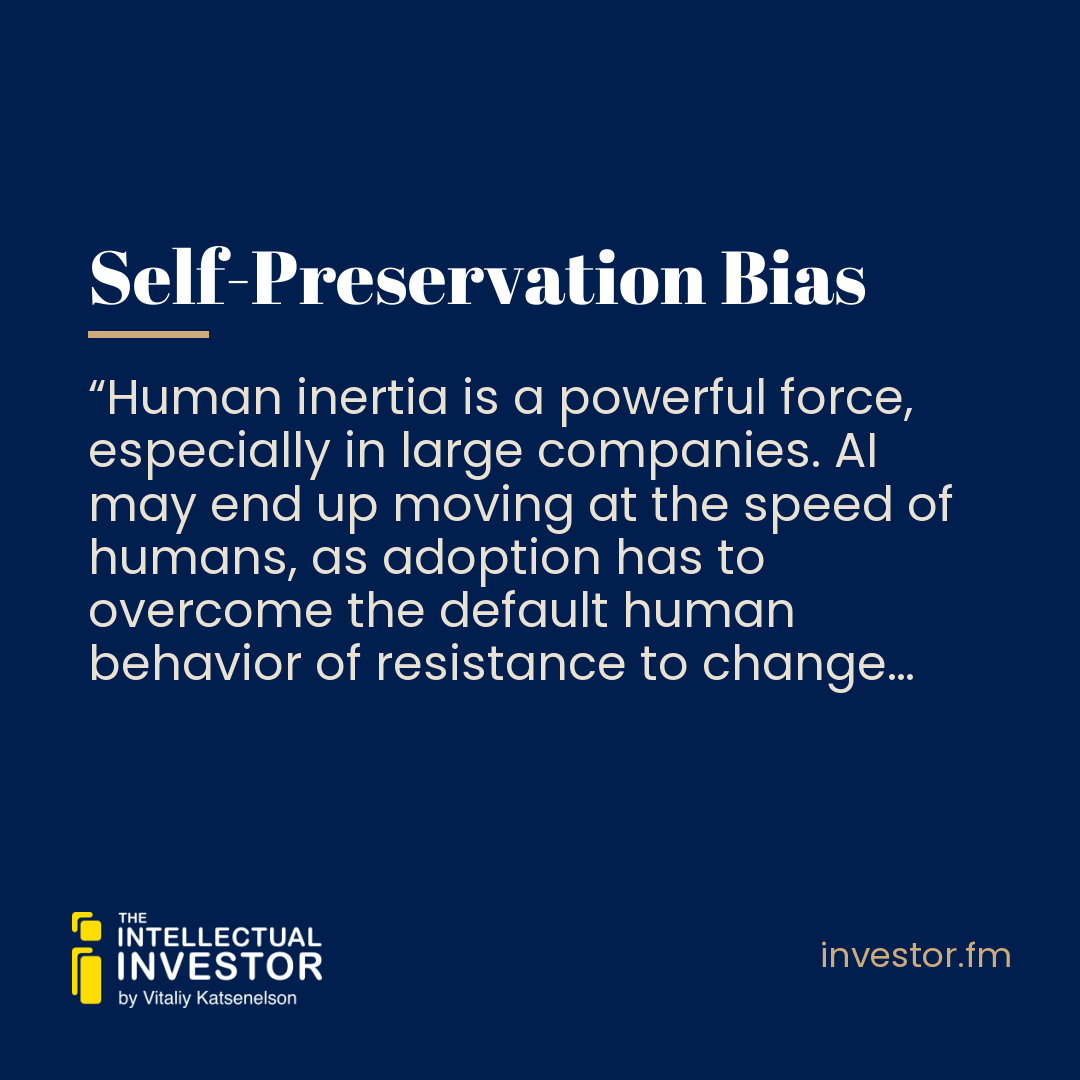
Self-Preservation Bias
Human inertia is a powerful force, especially in large companies. AI may end up moving at the speed of humans, as adoption has to overcome the default human behavior of resistance to change, fear for job security, and simply fear of the unknown.
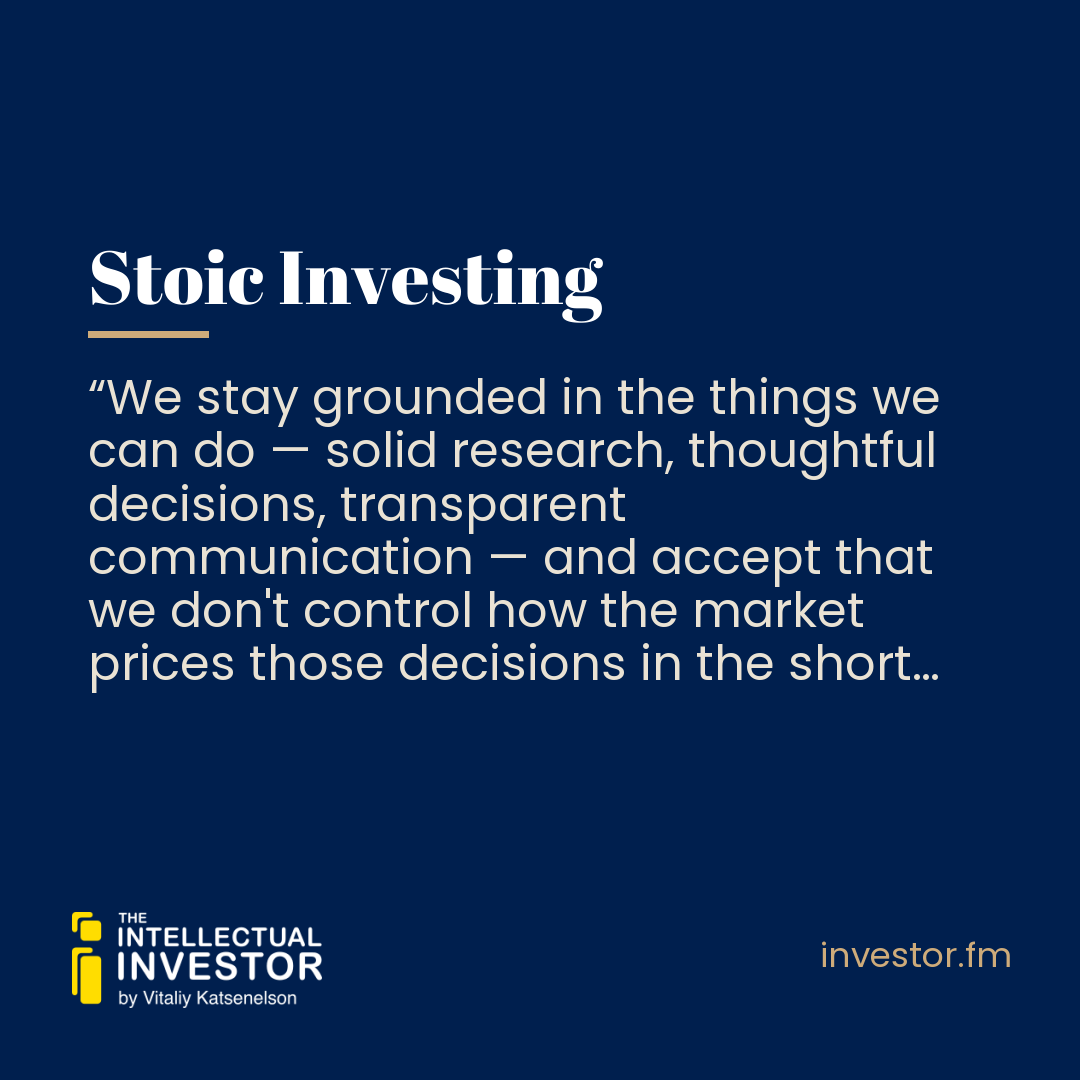
Stoic Investing
We stay grounded in the things we can do — solid research, thoughtful decisions, transparent communication — and accept that we don’t control how the market prices those decisions in the short run. When I say ‘accept,’ I don’t mean ‘ignore’; I mean we don’t get caught up in the daily drama of stock prices.
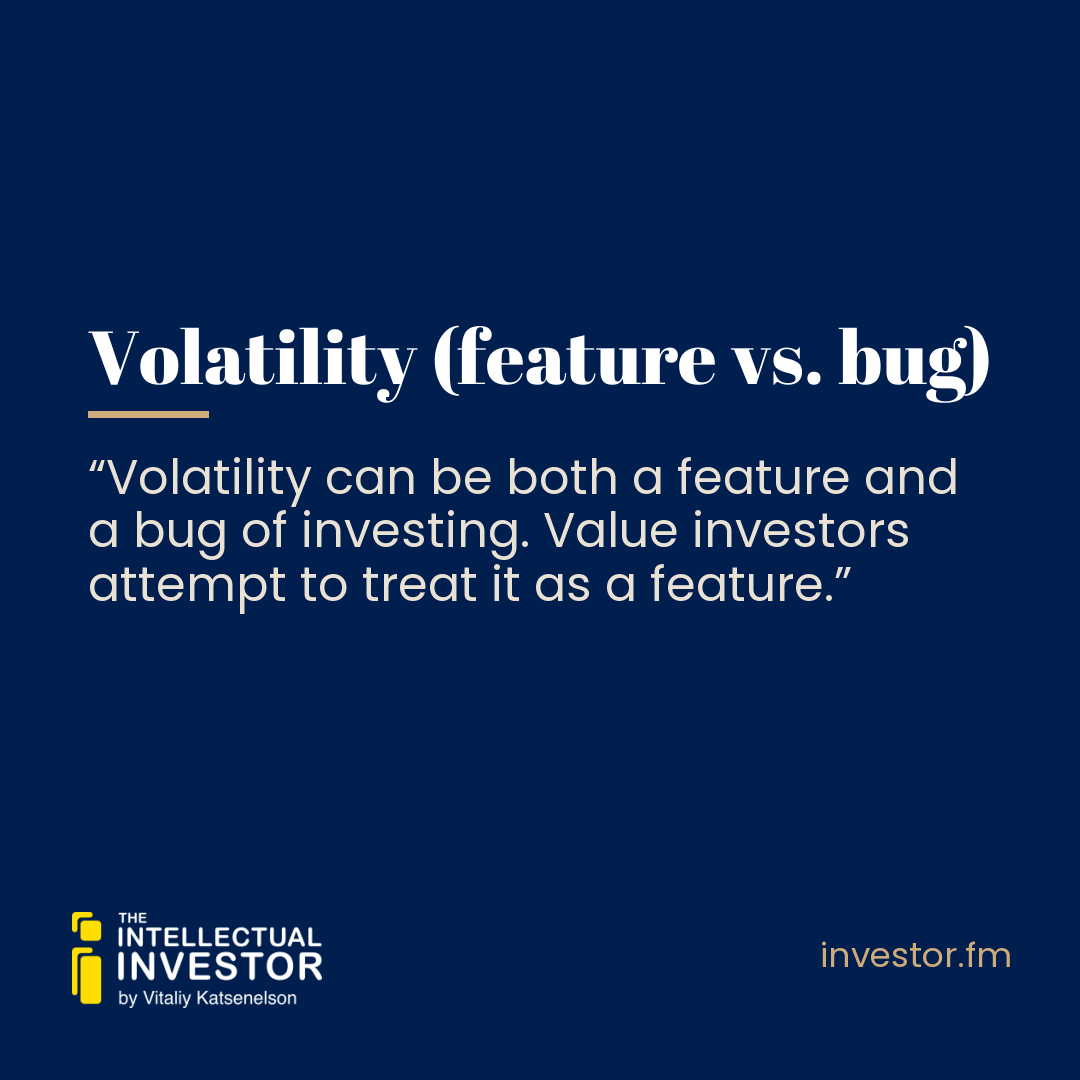
Volatility (feature vs. bug)
Volatility can be both a feature and a bug of investing. Value investors attempt to treat it as a feature.